My Journey
From IT to Learning Designer to Strategist. Same mission: help them learn.

Hello there!
I'm a learning professional who doesn't read the instruction manual. Yes, I see the irony in that. Whether it's a new video game, piece of tech, or a project, I'm there on Day 1 digging in. Hands-on and headfirst is how I work best.
That's been my approach to renovating my partner and my 1940's Massachusetts home for the past 10 years. We've learned a lot by swinging a hammer and picking bits of plaster out of our hair. We share that home with 3 dogs, 2 cats, and 11 chickens. Okay, the chickens share the backyard, but that counts.
In my spare time, I'm a gamer. World of Warcraft, Expedition 33, the Legend of Zelda are some of my recent addictions... eh, I mean hobbies. Gaming is how I stay connected and explore worlds beyond this one, and I pick up some learning and engagement tips while I'm at it.
So, how did I find my way to learning?
Not that kind of psychologist.
When people hear that you studied psychology, they typically think of someone sitting in a chaise with a notepad judging their every thought and motivation. It couldn't be further from the truth.
In my Bachelor programs, I studied both English and Psychology at Arizona State University. While they may seem like opposite ends of the spectrum, they both have something in common: figuring out how people think and why.
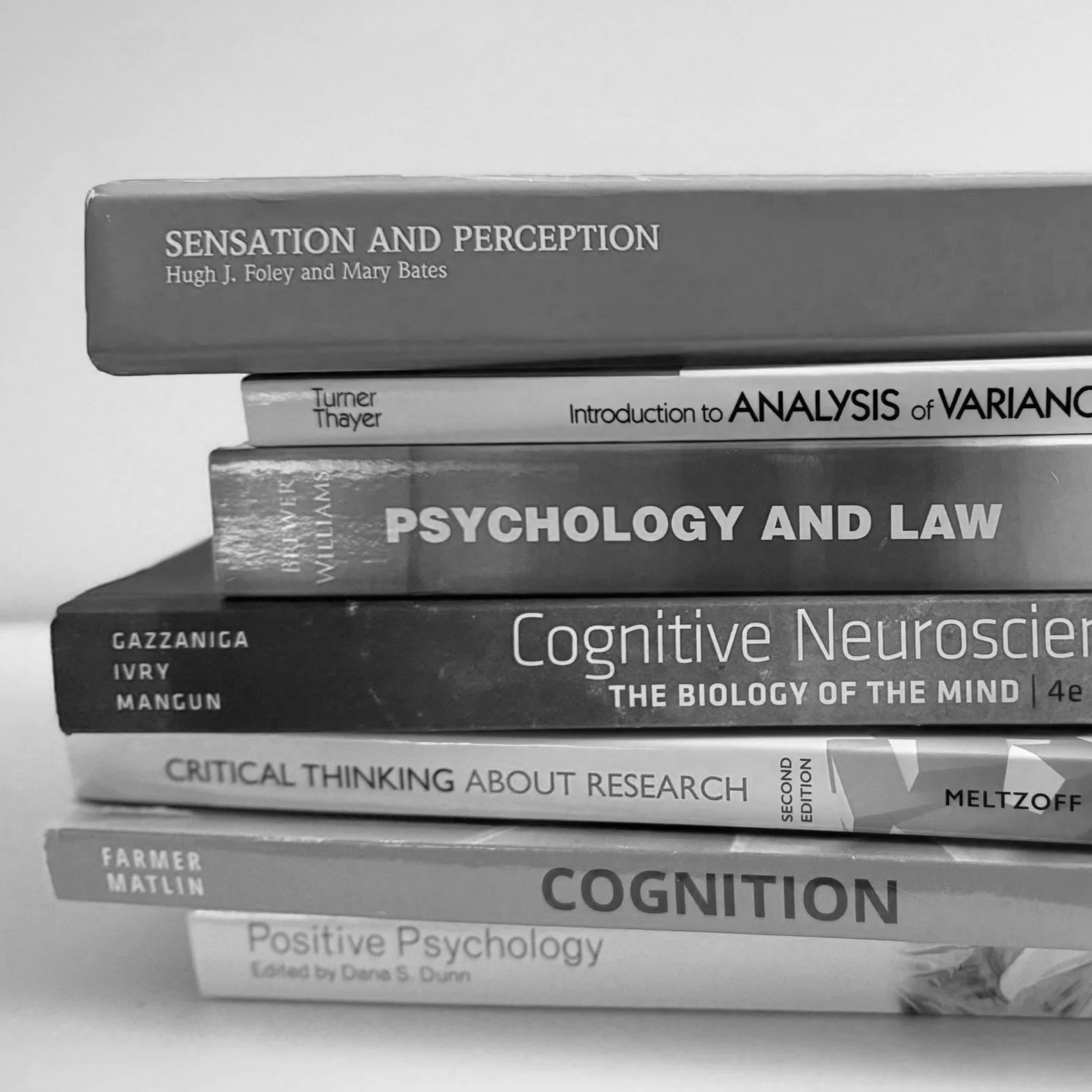
In 2017, I went back to Arizona State University (this time online) to get my Master of Science in Psychology. This is where I started to explore Cognitive Psychology. Cognitive Psychology is about how the brain takes in information, organizes it, stores it, and retrieves it. It's memory, attention, perception, and problem solving. In other words, it's the science behind how people actually learn.
What I learned shapes everything I design. When I build a learning experience, I'm not guessing what might work. I'm thinking about how the brain actually works. I'm chunking content so it doesn't overload working memory. I'm spacing practice so it sticks. I'm building in retrieval so learners aren't just recognizing information, they're applying it. I'm making experiences active instead of passive because the brain doesn't learn by watching. It learns by doing. It learns by sharing.
But knowing how people learn is only half of it. You also have to know whether the learning actually worked. My science background gave me the tools to experiment and measure what matters. I don’t stop when a training launches. I’m curious about whether it works and why. This helps us change course or replicate and scale the wins.
A little bit of tech. A little bit of training.
My first job out of high school was working for Apple on the frontlines in their retail stores. I spent 3 days in Sales before they realized I had a knack for training. At that time, Apple only had two pathways: you either become a trainer (Creative) or you become a technician (Genius). The problem? 18-year-old Bri wanted to do both.
This was the first (but not the last) time I worked with senior leaders to carve a new path based on a gap. Together, we developed and piloted the Family Room Specialist position. This role became the development pathway to train Geniuses and Creatives in both training and tech before they specialized in one or the other. It created more well-rounded techs and more empathetic trainers. As one of the first people in the company to take on this new role, I got to shape how it worked. Now, this position is rolled out worldwide.
During my 6 years at Apple, I opened two new stores, helped train hundreds of customers (and new Geniuses), and eventually took the pathway to Genius. I learned problem-solving, troubleshooting, and quickly making someone's worst day a whole lot better.
After Apple, I went into IT at Arizona State University, where I dipped my toe into higher education. Same products. Same troubleshooting. Different users and needs.

From IT to ID
In 2014, I made the move from Arizona to Massachusetts, and with that came my first real steps into the learning field. I started at Springfield College as a Mobile Applications Coordinator helping faculty integrate iPads into their classrooms. It didn't take long to realize that working backward from the tech instead of the learner and faculty needs was not the answer. Faculty and staff didn't need someone pushing iPad adoption. They needed training.
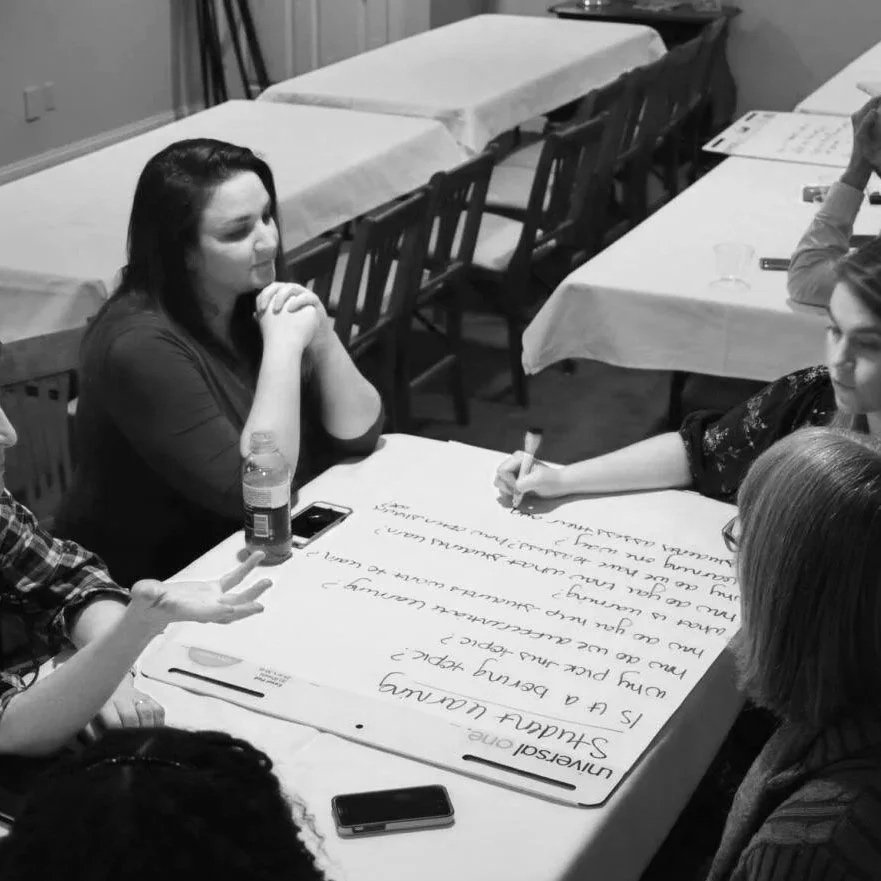
I proposed the idea to the CIO to create a new role and became the college’s first Learning and Development Coordinator. I built the training infrastructure from the ground up for 1,500+ users, hosted faculty workshops and instructor-led sessions, created a five-year strategic plan. In 2017, we opened the college's first Center for Teaching and Learning.
As my role expanded, I led the college's LMS migration from Moodle to D2L, delivering 150+ training sessions to onboard faculty, staff, and students. As the college explored online learning, it was clear the college’s need was evolving again. We built the first Instructional Design team where I was learning from expert IDs with years of industry experience. It became trial by fire when COVID-19 hit. As a new ID, I onboarded faculty to online teaching and developed over 300 courses in under 3 months.
During this time, I also started teaching online for both Springfield College and Arizona State University. COVID-19 was an all-hands-on-deck situation and I was happy to answer the call.
It’s always Day 1 at Amazon.
Amazon years work like dog years. 1 year at Amazon is like 7 at any other company. My 5+ years at Amazon had the most significant impact on the way I design, think, and collaborate.
In 2021, I joined Amazon in my first corporate ID role on the Alexa team, designing technical and compliance training for machine learning associates. This is where I learned Storyline, Rise, and Vyond, and developed the muscle for coordinating with SMEs and cross-functional stakeholders.
In 2022, I moved to the team who supports Customer Service associates worldwide. This is where I grew into a lead. I wasn't just designing. I was also mapping end-to-end curricula, coordinating other designers, developing my peers, managing timelines, and presenting in weekly and monthly business reviews. I led the launches for 6 blended curricula (91 learning assets, 15,000 learners, 11 languages) while individually designing over 70 of my own trainings.
In 2024, I led our organization's LMS migration. I identified compatibility and UX risks early and built an initiative to convert and migrate 10,000 learning assets with zero downtime (while also improving the LMS experience for everyone at Amazon). This won me Amazon’s OneCS award for embracing new technology and my high-velocity decision-making.
In 2025, I shifted into a learning strategy role. I wasn't just designing training or mapping curricula anymore. I was deciding how we design training. I built the human-AI design framework that determined where we should invest our human creativity and where we should automate with AI. I pioneered our team's adoption of an LLM-powered simulation platform and a GenAI content creation tool. I launched a 3-level workforce readiness program (95% completion, 96% satisfaction). I built an organization-wide Kirkpatrick evaluation strategy to measure and iterate at every level. During all of this, I ran a series of controlled experiments that led to global scaling recommendations.
Being a lead isn't just about doing the work. It's about making sure everyone around you can do it too. Throughout my time, I created processes, guides, wikis, resources, and mentored dozens of new IDs. I created upskilling series, templates, and repeatable processes so the team could scale without me being the bottleneck.